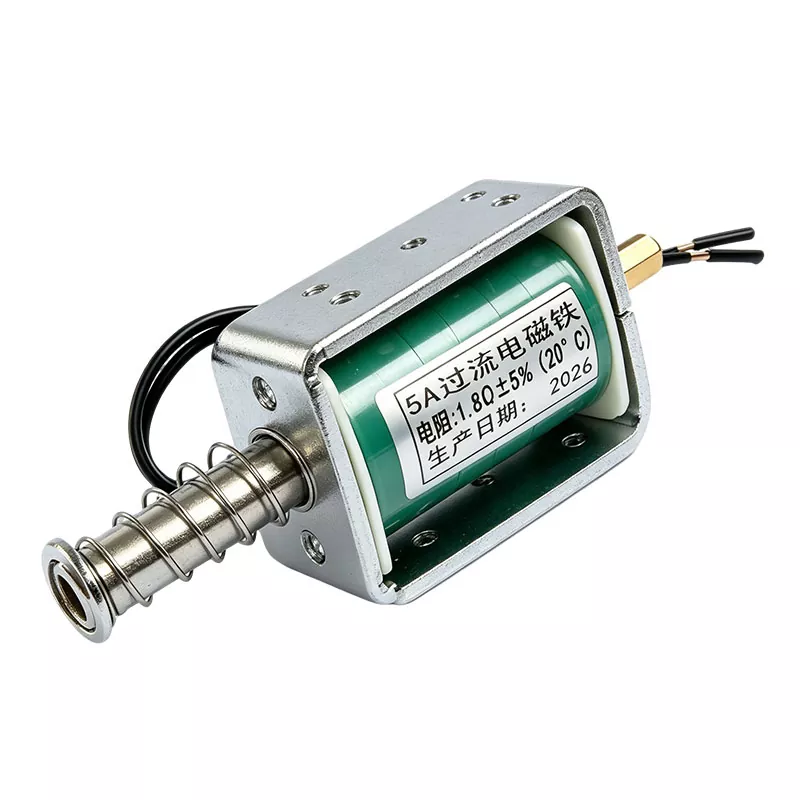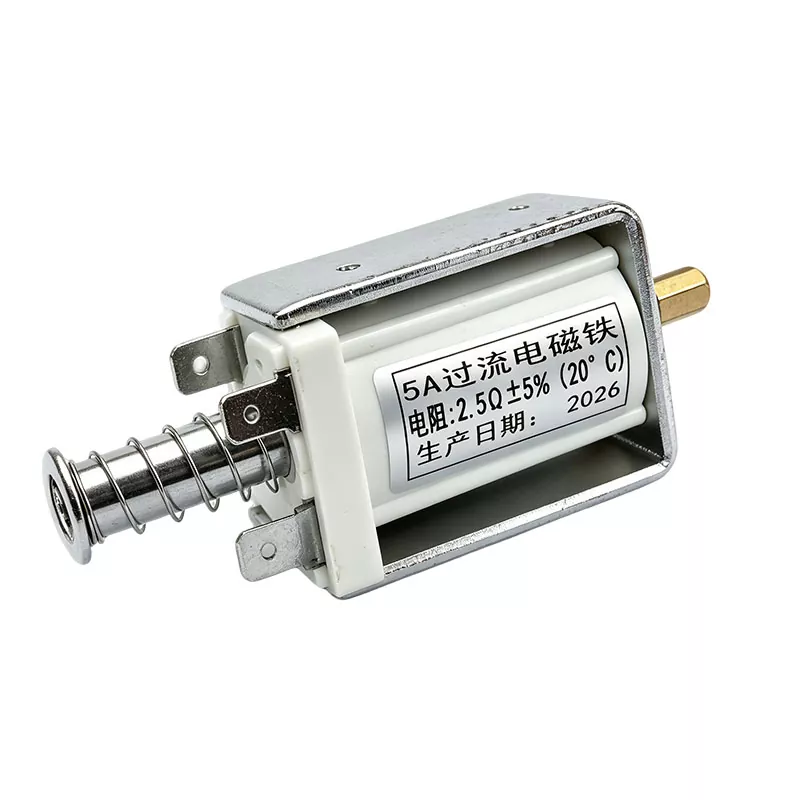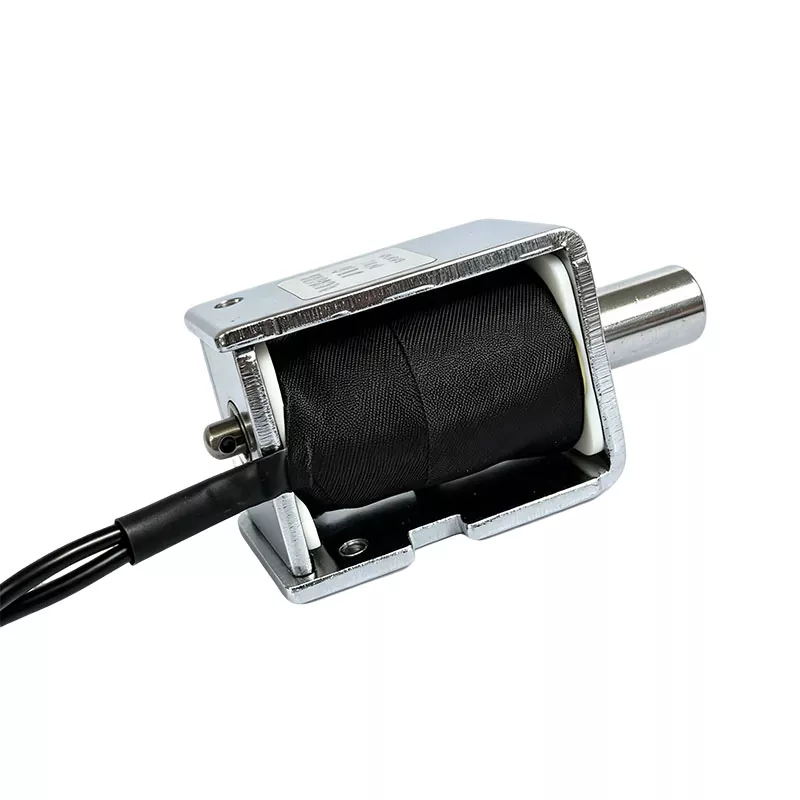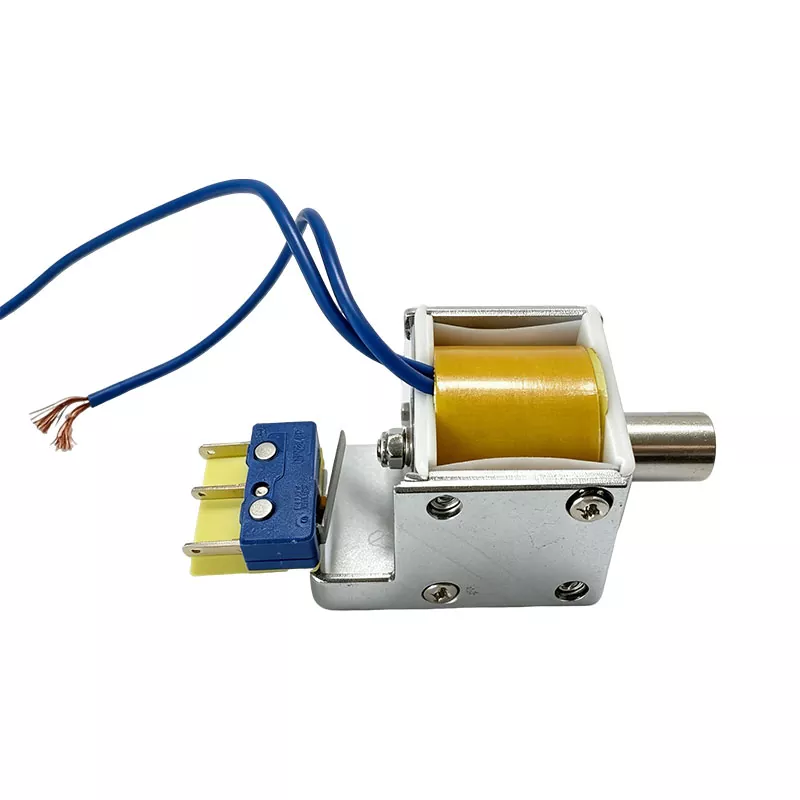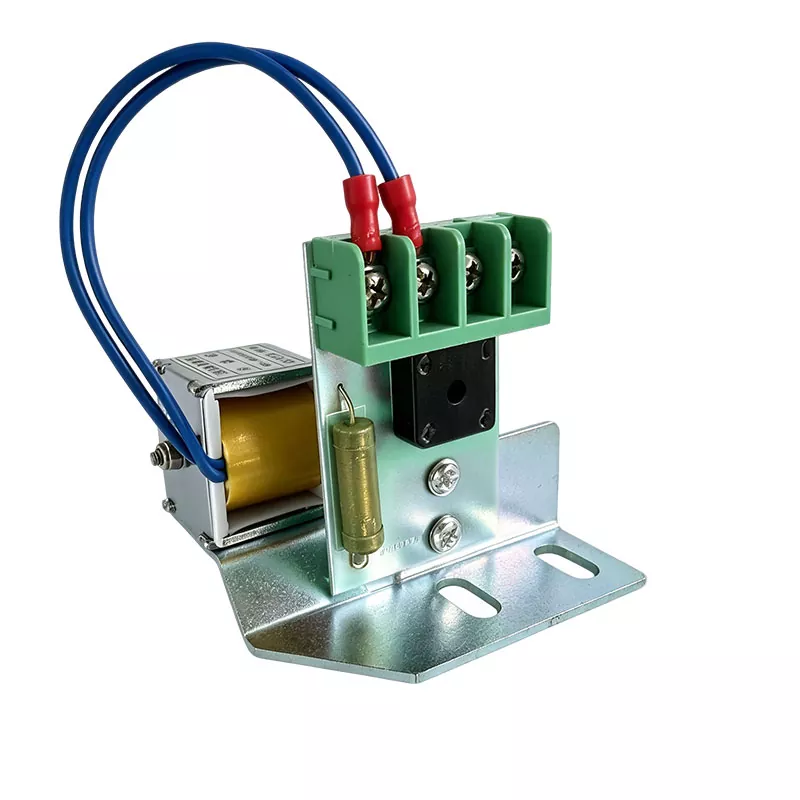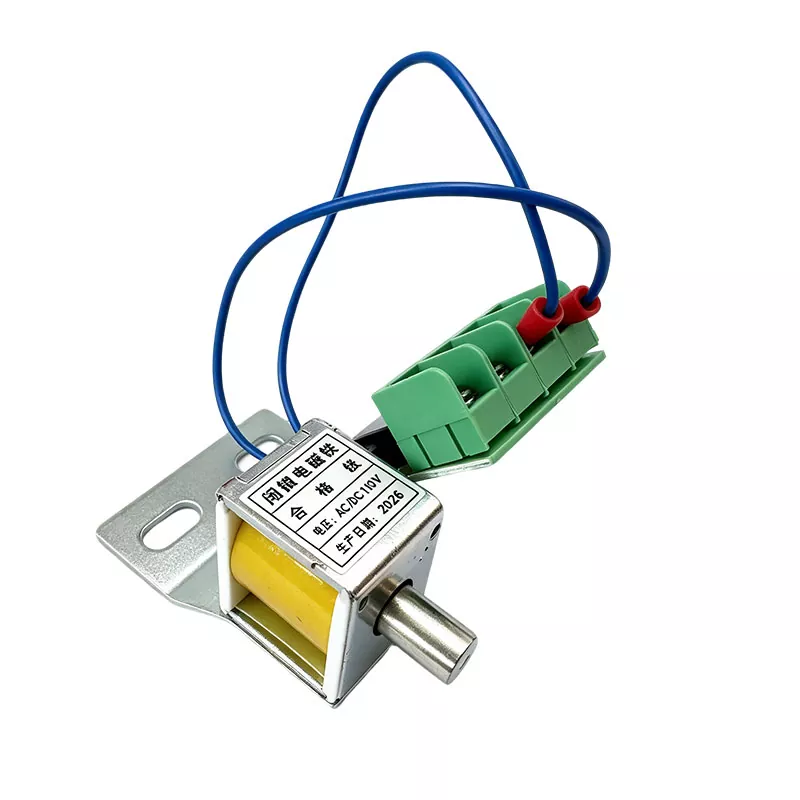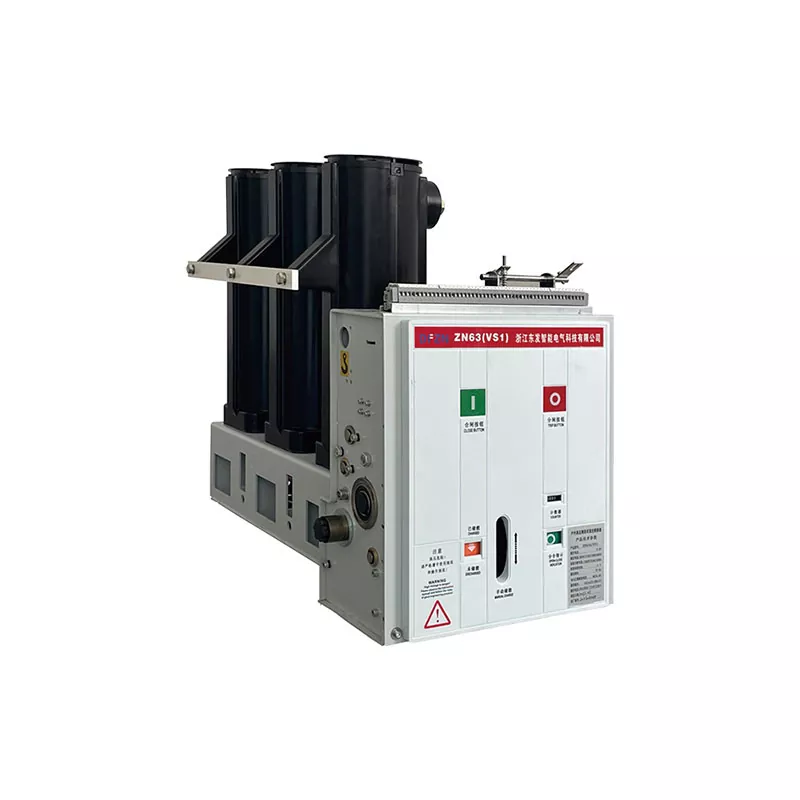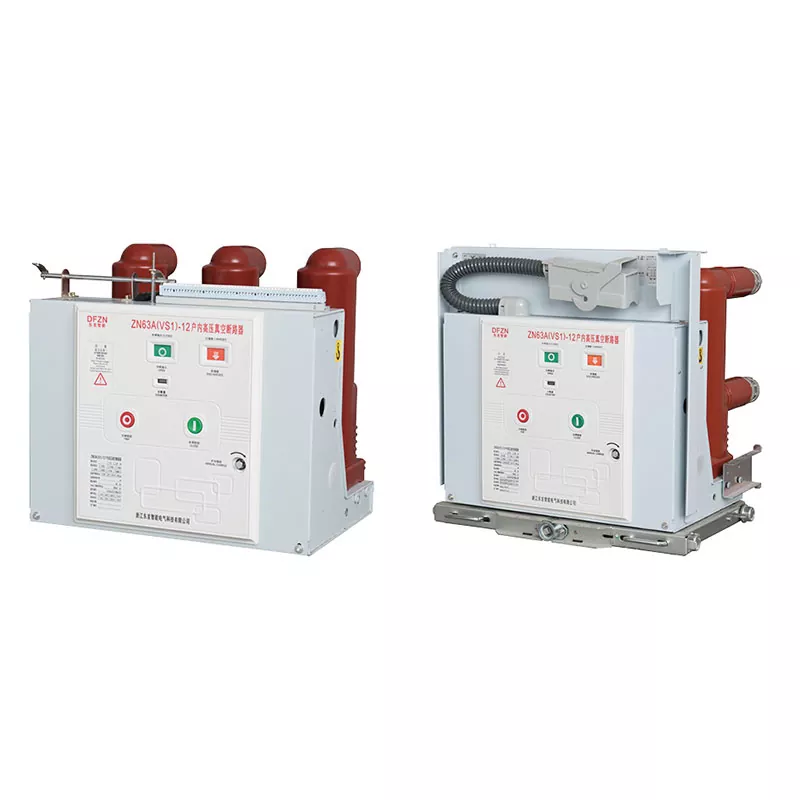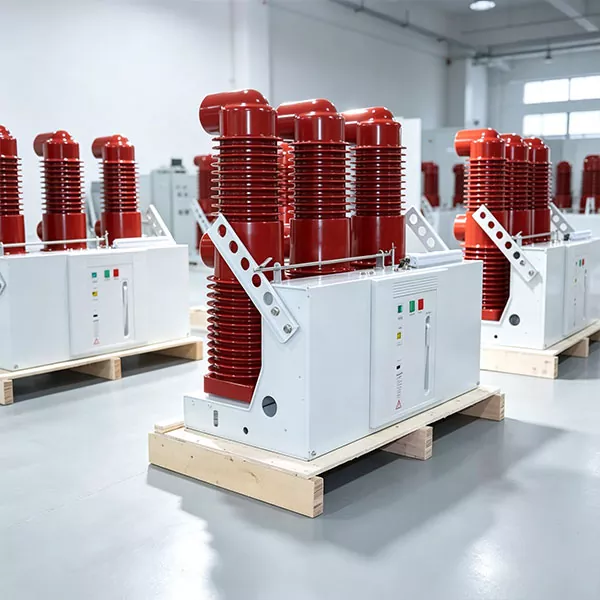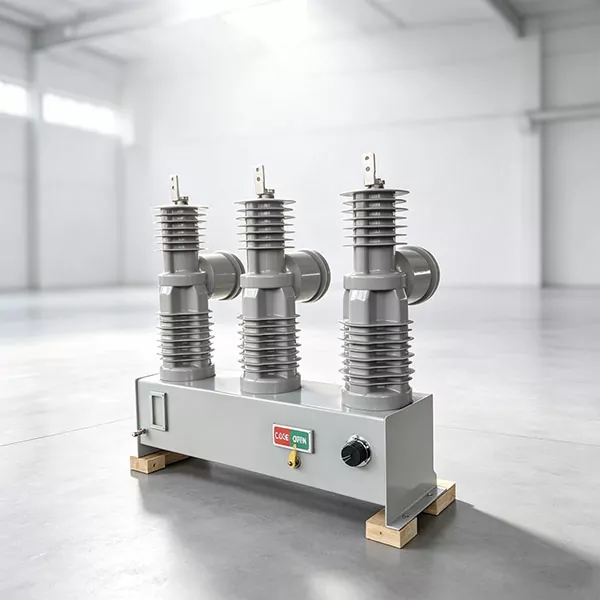

Dongfa Intelligent supplies global high voltage switchgear builders and power engineering buyers with factory-direct Electromagnetic Coils and Solenoids. These are core execution components in high voltage switchgear operating mechanisms, used for latching, position detection, and overcurrent tripping.
Main products include AC/DC 110V latching solenoids, DC220V latching solenoids with auxiliary micro switch, 5A overcurrent solenoids (2.3Ω, 2.5Ω, 1.8Ω), and position latching solenoids with arc suppression. Selection requires focusing on operating voltage, coil resistance, push rod stroke, reset method, mounting holes, and auxiliary signal feedback.
Instead of browsing by part number, start from the function the solenoid needs to perform inside the mechanism.
Universal input for both AC and DC 110V control circuits. With PCB terminal board for easy wiring. Reduces selection errors and simplifies stock models.
DC220V control voltage, with auxiliary micro switch providing real-time position signal feedback to the controller or SCADA system.
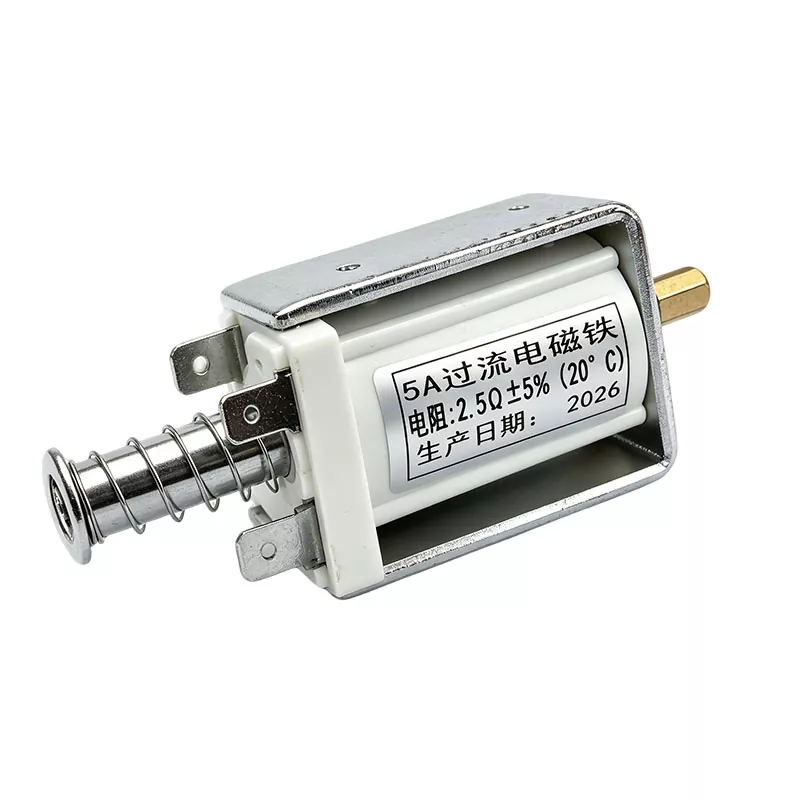
Current-driven, with resistance options 1.8Ω / 2.3Ω / 2.5Ω. Lead wire or plug-in type. Adjustment end or locking nut for fine-tuning trip current.
With arc suppression function. Maintains a stable position for indicator or interlock circuits, reducing contact wear from arcing.
Latching, position detection, or overcurrent tripping? The function determines the product family — not the other way around. Latching solenoids hold a position after power removal; overcurrent solenoids trip at a specific current threshold; position latching solenoids feed a signal back to the control circuit.
Our latching solenoids cover AC/DC 110V and DC220V. AC/DC 110V universal input reduces selection errors and stock-keeping complexity for manufacturers serving both circuit types.
The 5A overcurrent solenoids cover 1.8Ω, 2.3Ω, and 2.5Ω. Lower resistance draws higher current at a given voltage, so the resistance value directly determines the trip threshold. Available in lead wire or plug-in types, with adjustment end or locking nut for fine-tuning.
Push rod stroke, reset method, and mounting hole positions must match the operating mechanism. An external reset spring gives visible status and simplifies field replacement.
If the controller or SCADA system needs to know the solenoid's position, choose a model with an auxiliary micro switch or PCB terminal board. This eliminates the need for a separate position sensor in the mechanism.
| Product Type | Operating Voltage | Coil Resistance | Features |
|---|---|---|---|
| AC/DC 110V Latching Solenoid | AC/DC 110V | To be confirmed | With PCB terminal board |
| DC220V Latching Solenoid | DC220V | To be confirmed | With auxiliary micro switch |
| 5A Overcurrent Solenoid | Current-driven | 1.8Ω / 2.3Ω / 2.5Ω | Lead wire / plug-in optional |
| Position Latching Solenoid | AC/DC 110V | To be confirmed | With arc suppression |
These Electromagnetic Coils and Solenoids use AC/DC universal 110V input — reducing selection errors and simplifying stock-keeping for manufacturers serving both AC and DC control circuits.
Auxiliary micro switch — provides real-time position signal feedback to the controller or SCADA system, eliminating separate position sensors.
5A overcurrent solenoids with low resistance — 1.8Ω / 2.3Ω / 2.5Ω options, with precise adjustable operating current for stable tripping.
External reset spring — visible status and easy field replacement, no need to disassemble the mechanism.
Factory direct — better price at equivalent IEC configuration, with dedicated low voltage assembly lines and per-unit testing.
“We purchased Dongfa Intelligent's 5A overcurrent solenoids for circuit breaker overcurrent tripping mechanisms. The 2.3Ω low resistance design stabilized the trip current at 5A with excellent action consistency.” — Procurement Manager, Circuit Breaker Manufacturer
Technical questions buyers ask most often when specifying solenoids for operating mechanisms.
A normal solenoid holds its position only while powered — remove the current and a spring returns it. A latching solenoid uses a permanent magnet or mechanical detent to hold its position after power is removed. This matters in operating mechanisms because the solenoid may need to stay latched for hours or days without drawing current, avoiding continuous heat generation and coil burnout.
Because the solenoid's position is a state the control system needs to know. The auxiliary micro switch provides a dry contact that changes state when the solenoid latches or releases. This lets the controller, protection relay, or SCADA system confirm the mechanism's actual position — without adding a separate position sensor. It also enables interlock logic: for example, preventing a closing operation if the latching solenoid is not in the correct state.
Because overcurrent solenoids are current-driven, not voltage-driven. The trip threshold is set by the current flowing through the coil, and at typical control voltages (DC110V or DC220V), a 2.3Ω coil draws roughly 48A to 96A momentarily — enough to generate the electromagnetic force needed to trip the mechanism. A higher resistance would reduce the current below the trip threshold. The three resistance options (1.8Ω, 2.3Ω, 2.5Ω) allow fine-tuning the trip point to match the specific protection curve.
The coil is designed so that at 110V AC and 110V DC, the resulting electromagnetic force is sufficient to actuate the mechanism. AC and DC behave differently in a coil — AC creates a changing field that induces eddy currents, while DC produces a steady field — so the coil geometry and wire gauge are tuned to work acceptably under both. This is common in switchgear where the same mechanism platform is used for both AC and DC control circuits, and it reduces the number of SKUs a manufacturer needs to stock.
Position latching solenoids are often used to drive indicator circuits or interlock contacts, where the solenoid's moving contact opens and closes a low-current signal path. Even at low current, arcing at the contact can gradually erode the metal surface and cause intermittent signal failures. Arc suppression — usually a magnetic blowout or RC snubber arrangement — extinguishes the arc quickly, extending the contact life and keeping the position signal stable over thousands of operations.
Provide us with your mechanism drawing or the original solenoid's stroke specification. We verify the push rod stroke, reset time, and mounting hole spacing against your mechanism before production. If you only have the old solenoid on hand, measuring the stroke from the fully released position to the fully extended position is usually enough for us to match a replacement. Reset time is also verified per unit — reliable reset after power removal is as critical as reliable action.