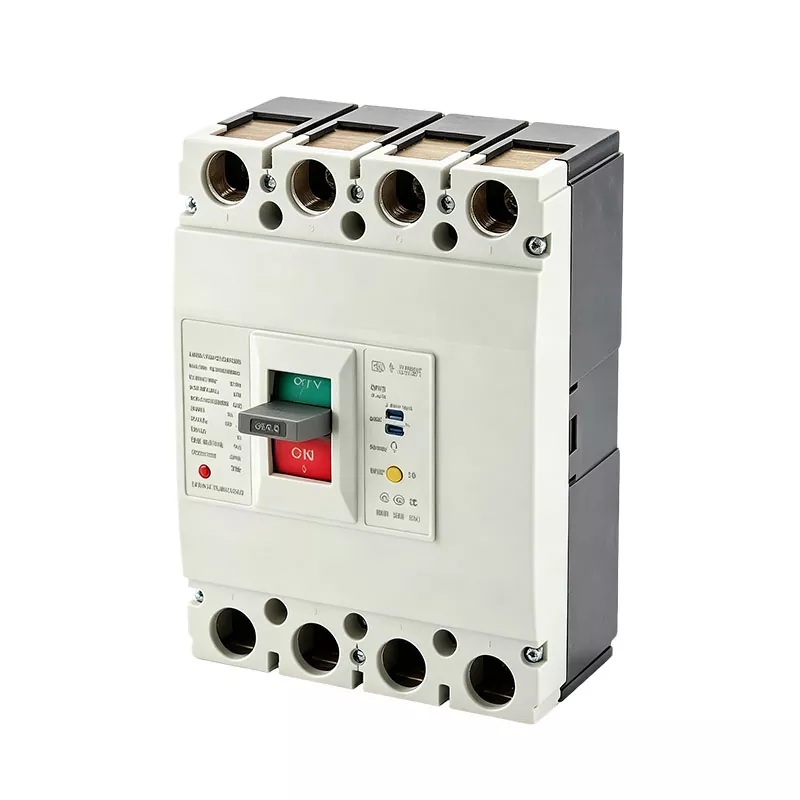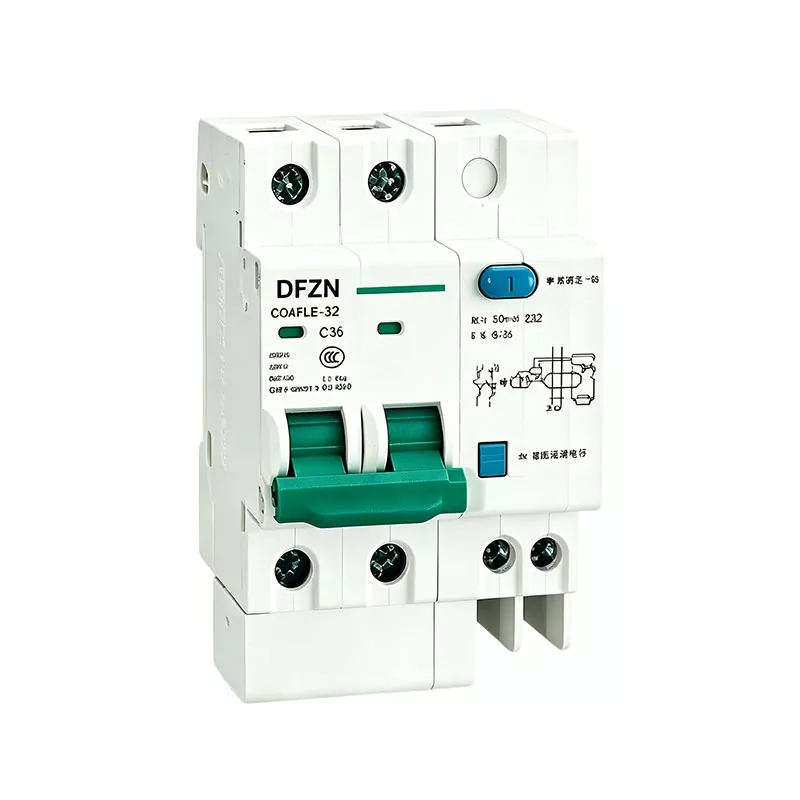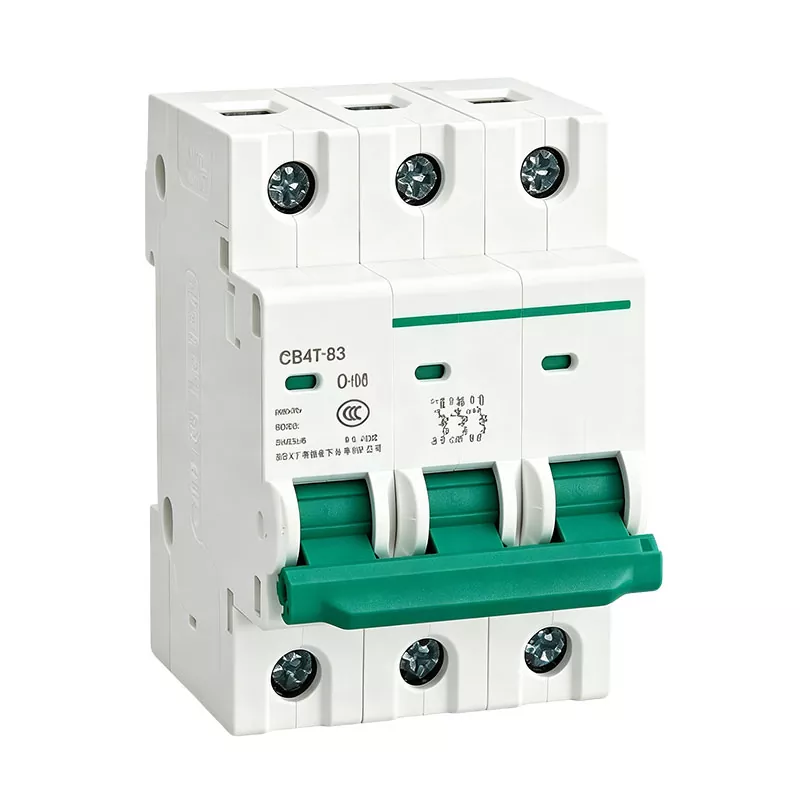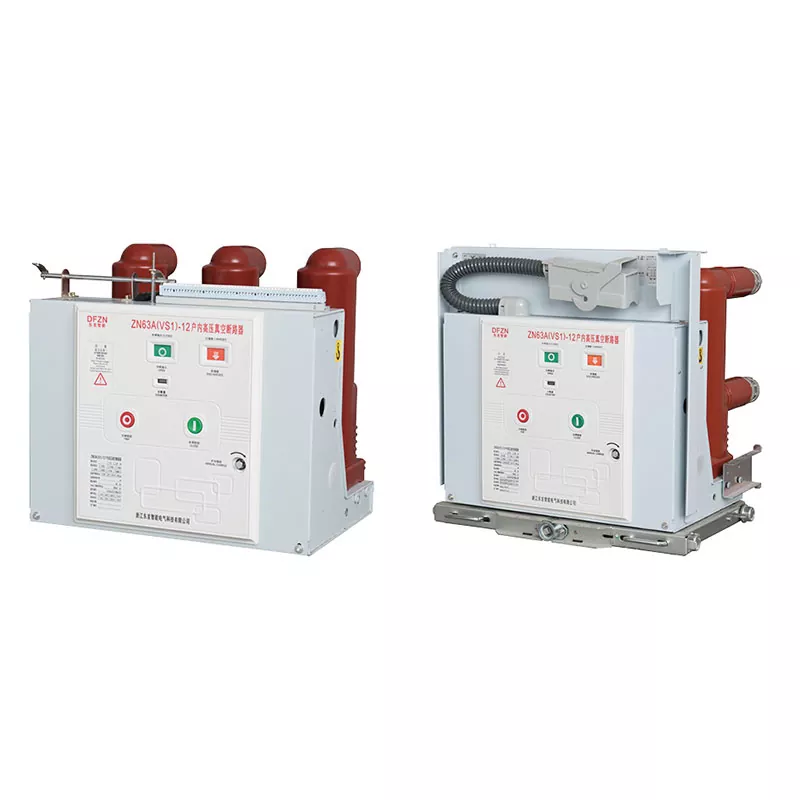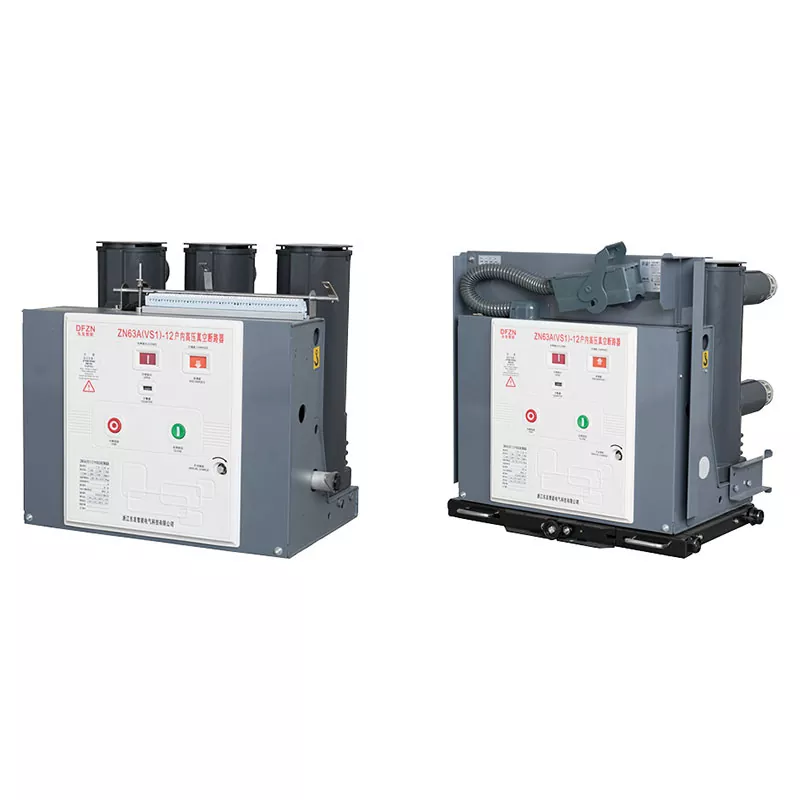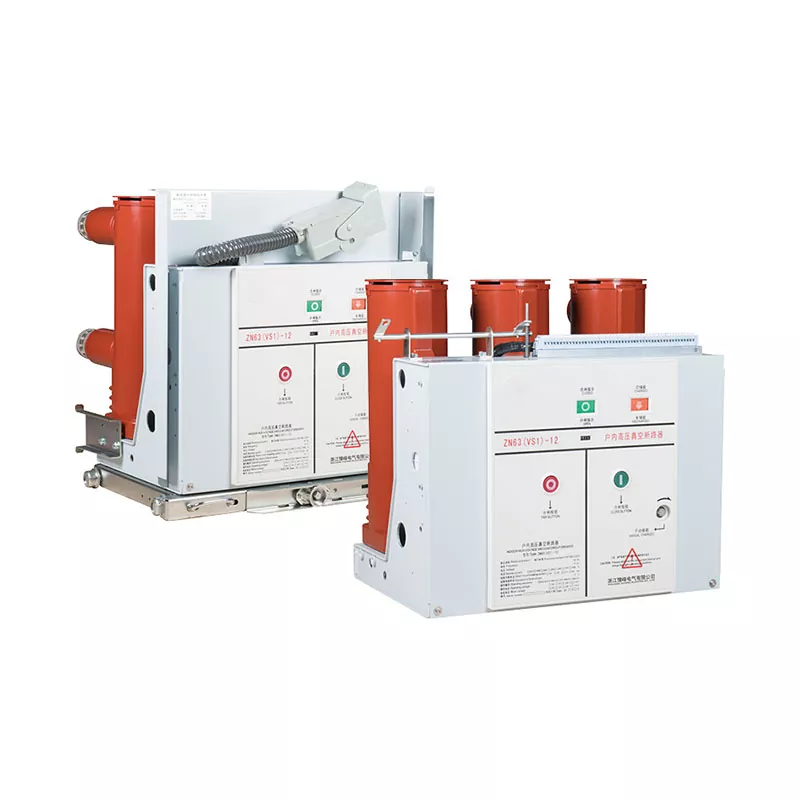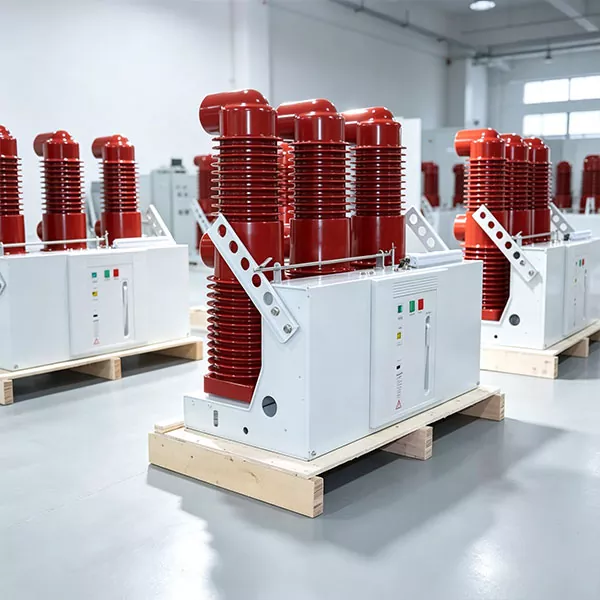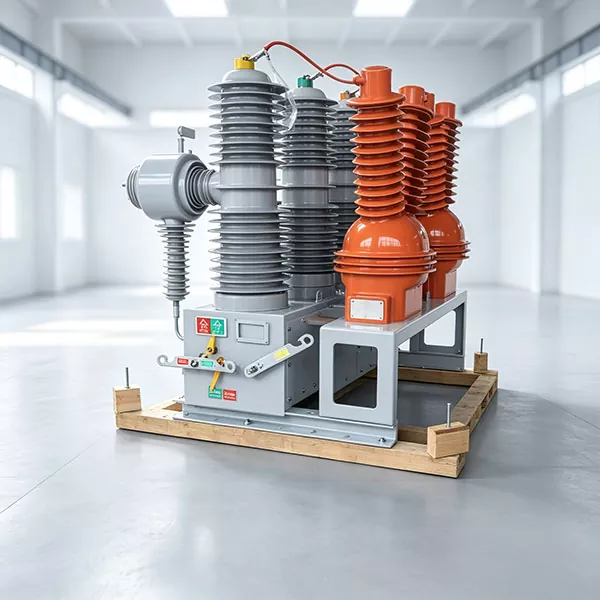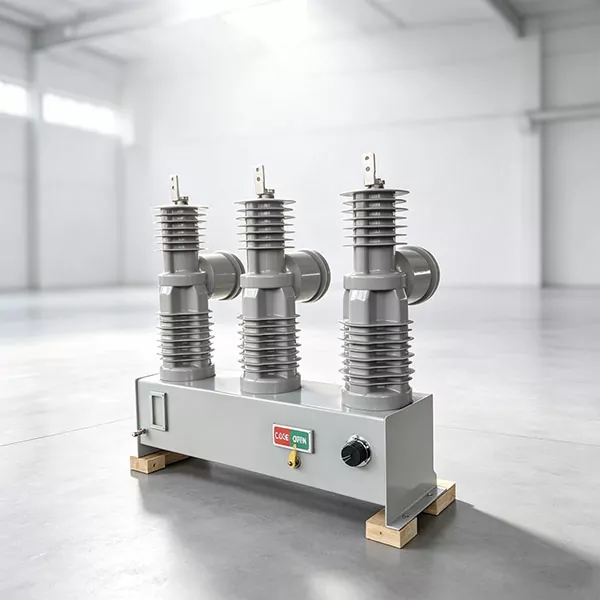
Dongfa Intelligent manufactures MCBs, RCBOs, and RCCBs for global low voltage distribution buyers, factory-direct. The three product images on the right show our current MCB and residual current protection range.
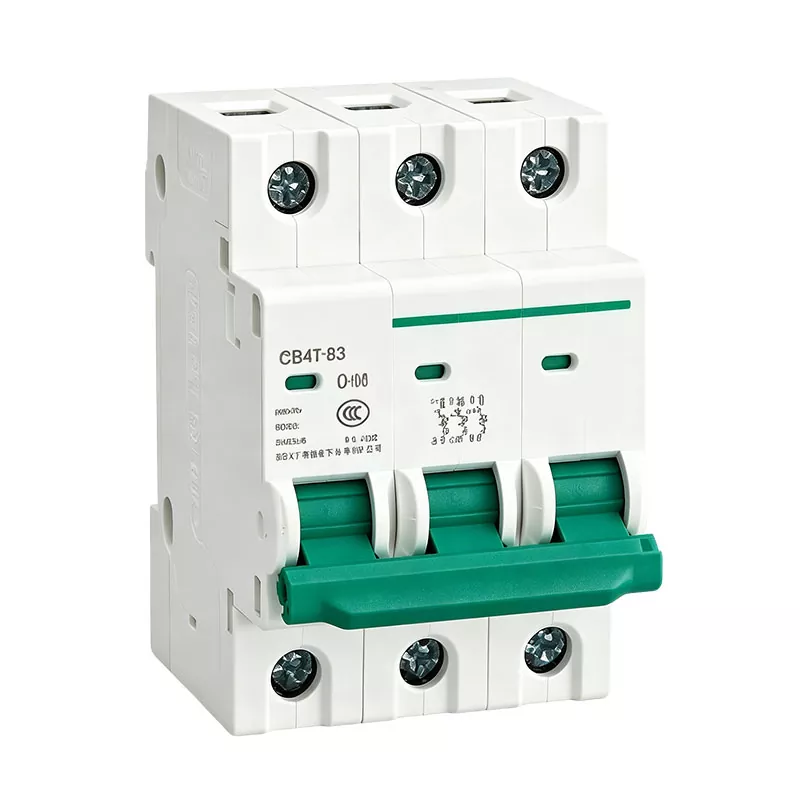
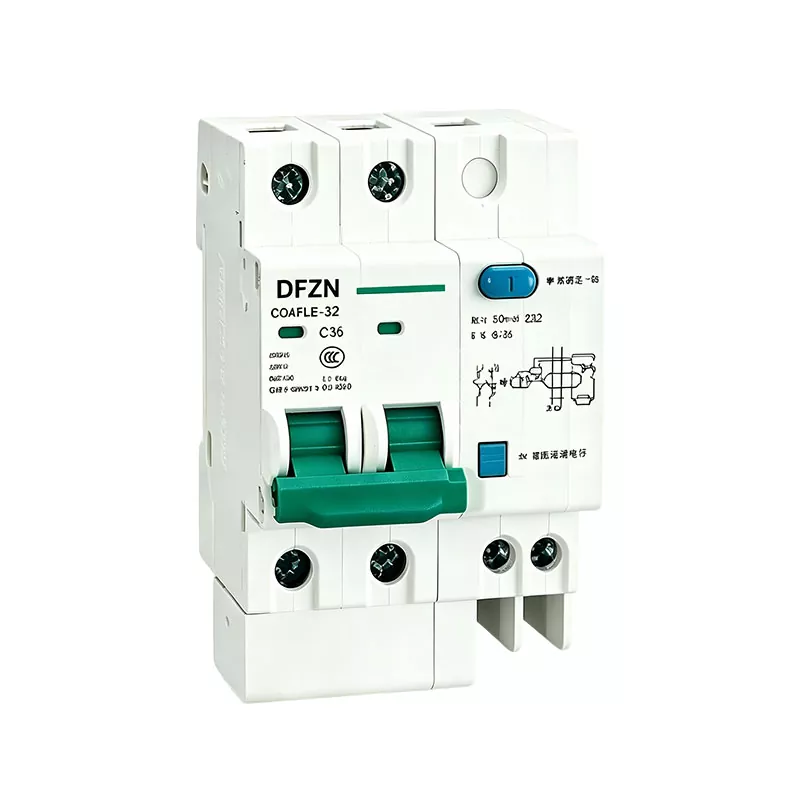
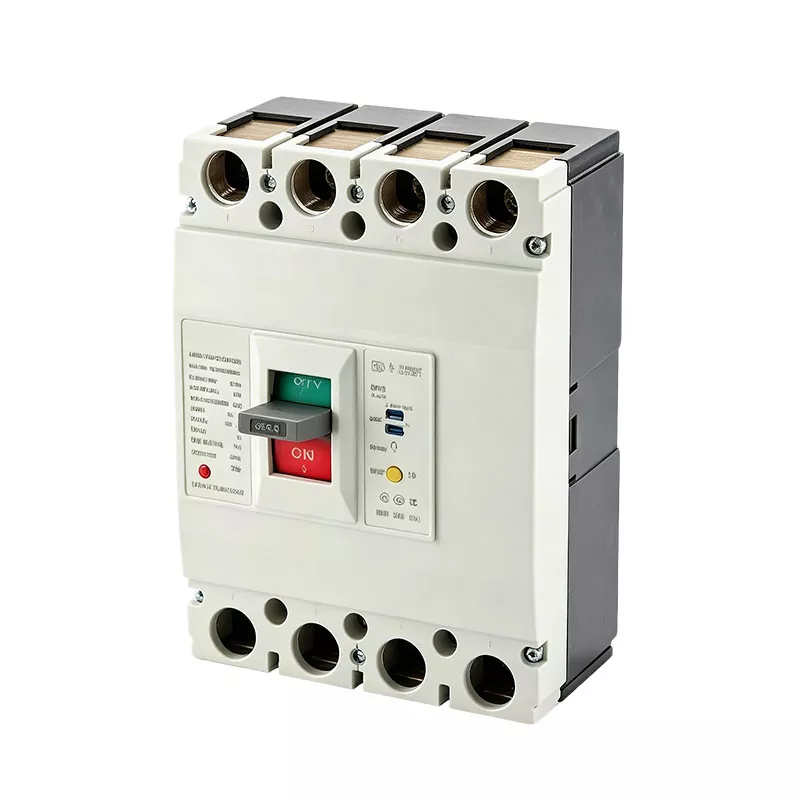
The most common specification mistake is treating these three as interchangeable. They are not. Each one protects against a different fault, and choosing the wrong one leaves a gap in the protection chain.
Provides overload and short-circuit protection only. It does not detect residual current — it cannot protect a person from electric shock. Used as the basic branch protection device in every terminal circuit.
Combines residual current, overload, and short-circuit protection in a single device. One RCBO replaces an MCB plus a separate RCCB, saving DIN rail space and wiring.
Provides residual current protection only. It must be paired with an upstream or downstream MCB for overload and short-circuit protection. Used where a single residual current device protects a group of circuits.
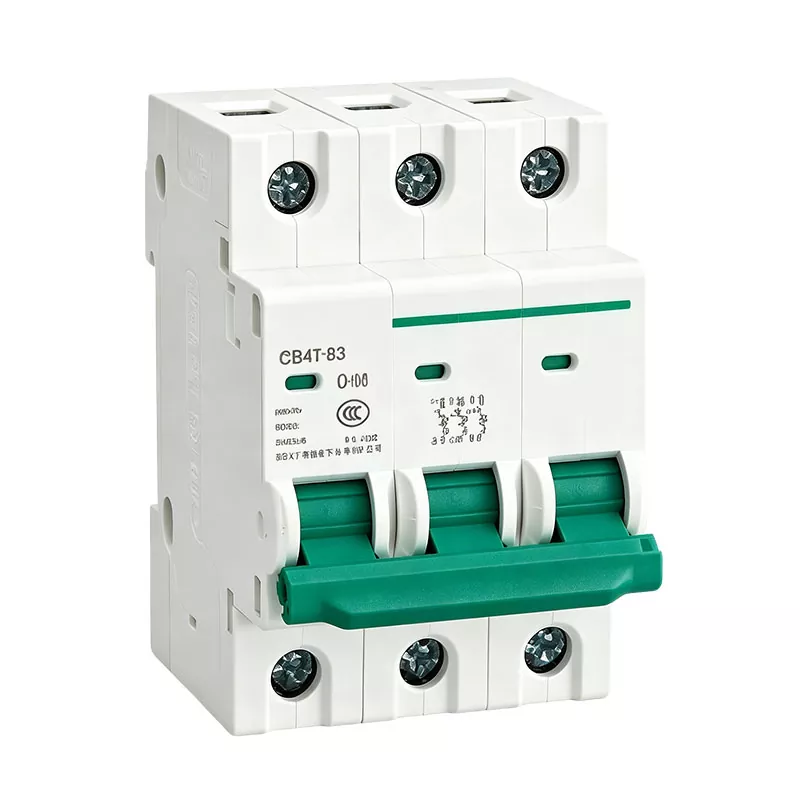
| Parameter | Specification |
|---|---|
| Pole / Wire Configurations | 1P+N, 2P, 3P, 3P+N, 4P |
| Rated Voltage | 230V (1P+N, 2P); 230/400V (3P, 3P+N, 4P) |
| Frame Current | 32A (6, 10, 20, 25, 32); 63A (6, 10, 20, 25, 32, 40, 50, 63) |
| Rated Residual Operating Current | 30mA / 50mA |
| Instantaneous Trip Characteristic | C type (5–10In); D type (10–14In) |
| Rated Short-Circuit Capacity | 4500A / 6000A |
| Rated Residual Making and Breaking Capacity | 2000A |
| Residual Operating Time | I△n ≤ 0.1s; 2I△n ≤ 0.05s; 5I△n ≤ 0.04s |
The residual operating current is not a matter of preference. It is determined by what the device is protecting.
30mA is the threshold below which an electric shock is generally survivable for a healthy adult. This is the standard sensitivity for socket circuits, bathroom circuits, and any circuit where people may come into direct contact with live parts.
Required by IEC 60364 for socket outlets up to 32A and for all circuits in locations with increased shock risk.
50mA is used where the primary concern is preventing electrical fires from insulation faults, rather than protecting individuals from direct contact. Common in industrial installations and circuits feeding fixed equipment.
Higher threshold reduces nuisance tripping on long cable runs with normal capacitive leakage, while still catching fault currents that could ignite insulation.
Trips at 5 to 10 times rated current. Handles the moderate inrush of lighting circuits, socket outlets, and general resistive or slightly inductive loads.
The default choice for most building distribution circuits, where start-up current is a few times the rated current and does not require special accommodation.
Trips at 10 to 14 times rated current. Required for loads with high starting current — motors, transformers, large solenoids, and equipment with significant inrush on power-up.
Without the higher threshold, a C-type breaker would trip every time the equipment starts, even though there is no actual fault.
Residual current + overload + short circuit in one RCBO — one device replaces three, saving DIN rail space and wiring time.
Choose the sensitivity that matches the application — personnel safety or fire protection — instead of a one-size-fits-all default.
Both curves available across the full current range, so the same product family covers lighting circuits and motor loads.
Residual operating time ≤0.1s at rated current, dropping to ≤0.04s at 5× rated current — fast enough to cut off electric shock current.
Rated residual non-operating current 0.5I△n effectively rides through normal line leakage and transient interference without nuisance tripping.
Better price at equivalent IEC configuration. Standard lead time 7–15 days, with MOQ as low as 1 unit for sample and trial orders.
Zhejiang Dongfa Intelligent Electrical Technology Co.,LTd. was founded in 2012 in Yueqing Economic Development Zone, Wenzhou, Zhejiang. Factory area over 2,000㎡, 17 employees, 4 technical engineers, 2 production lines, 1 set of testing equipment. Monthly capacity 600–700 units, annual capacity 7,000–8,000 units. Products exported to Southeast Asia and parts of Europe.
MCBs and RCBOs are assembled on dedicated low voltage lines. Each unit undergoes mechanical operation testing, residual current characteristic testing, and dielectric withstand testing before shipment. Residual operating current and operating time are individually verified, ensuring reliable 30mA/50mA residual current protection. Certified to ISO 9001, ISO 14001, and ISO 45001, with factory audits supported.
“We purchased Dongfa Intelligent's DZ47LE series RCBOs for commercial building distribution boxes in the Philippines. The 30mA residual operating current effectively protected personnel safety on socket circuits, and it has operated for two years without nuisance tripping.” — Procurement Manager, Southeast Asian Electrical Contractor
Practical questions buyers ask when selecting miniature circuit breakers and residual current devices for terminal distribution systems.
Use an RCBO when each circuit needs its own residual current protection — so that a fault on one circuit trips only that circuit, not the whole board. Use an MCB plus a shared RCCB when multiple downstream circuits can safely lose power together during a residual current fault, and cabinet space is not a constraint. In residential and commercial terminal distribution, per-circuit RCBOs are increasingly the standard because they minimise outage scope.
Because electric shock damage depends on both current and duration. A 30mA fault current that persists for a full second can still cause ventricular fibrillation. Our RCBOs operate at ≤0.1s at rated residual current, dropping to ≤0.05s at 2× rated and ≤0.04s at 5× rated. At higher fault currents, the device trips faster — which is exactly what protects the person in contact with the fault.
It means the device is guaranteed not to trip at residual currents up to half its rated value. For a 30mA RCBO, that means it will not trip at 15mA or below. This threshold exists because real circuits always have some normal leakage — through cable capacitance, EMI filters, and electronic equipment. Without this margin, the breaker would nuisance-trip constantly on healthy circuits. It rides through normal leakage while still responding to genuine fault currents above 30mA.
It depends on whether the neutral needs to be switched. Use 3P+N when the neutral passes through but is not required to be broken — this is the most common configuration for three-phase distribution boards. Use 4P when the neutral must also be isolated, for example in systems where the neutral could carry fault current or where full isolation is required by the local code. Both are available in the DZ47LE series.
4500A is adequate for circuits where the prospective short-circuit current at the point of installation is low — typical of the far end of a distribution system, after the main breaker and several cable runs. 6000A is required closer to the source, where the available fault current is higher. The correct choice depends on the calculated prospective short-circuit current at the breaker's installation point, not on the breaker's own rating.
Yes. MOQ is 1 unit, and standard lead time is 7–15 days. This allows buyers to evaluate samples before committing to a bulk order, and it also supports small maintenance and retrofit projects where only a handful of breakers are needed. Each unit shipped — whether 1 or 1,000 — goes through the same full inspection process before dispatch.
Please provide: Pole/Wire Configuration + Rated Current + Residual Operating Current + Trip Characteristic + Quantity. Send an inquiry, and our technical team will provide selection advice and a quote within 24 hours.
Send Requirements