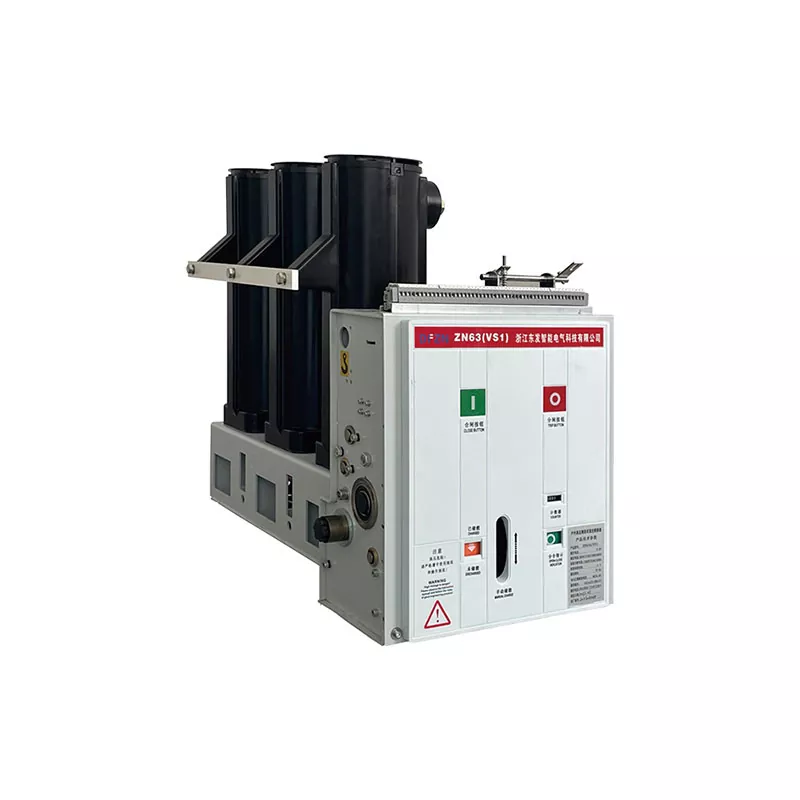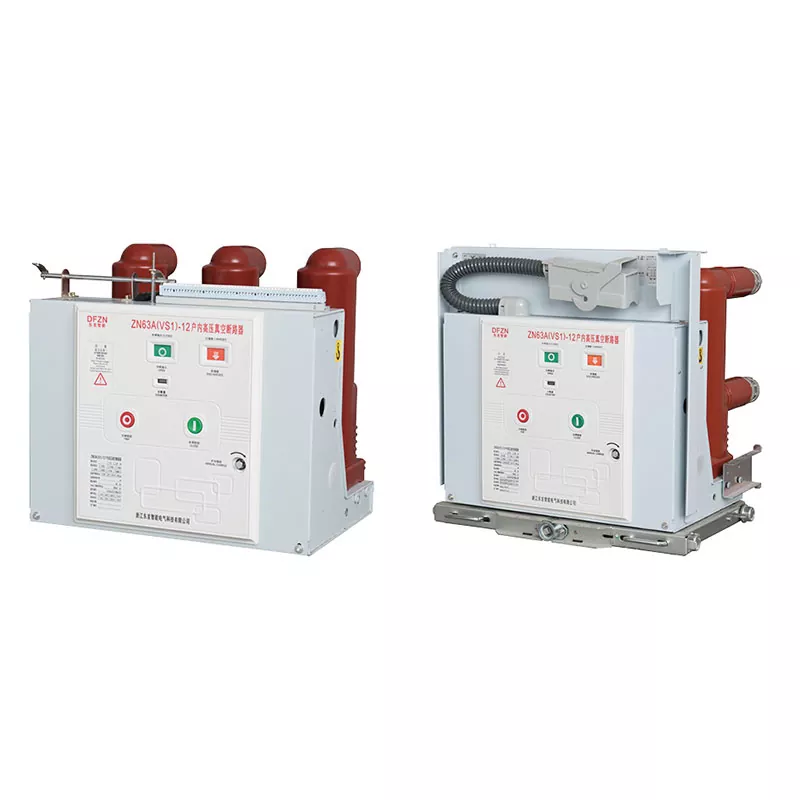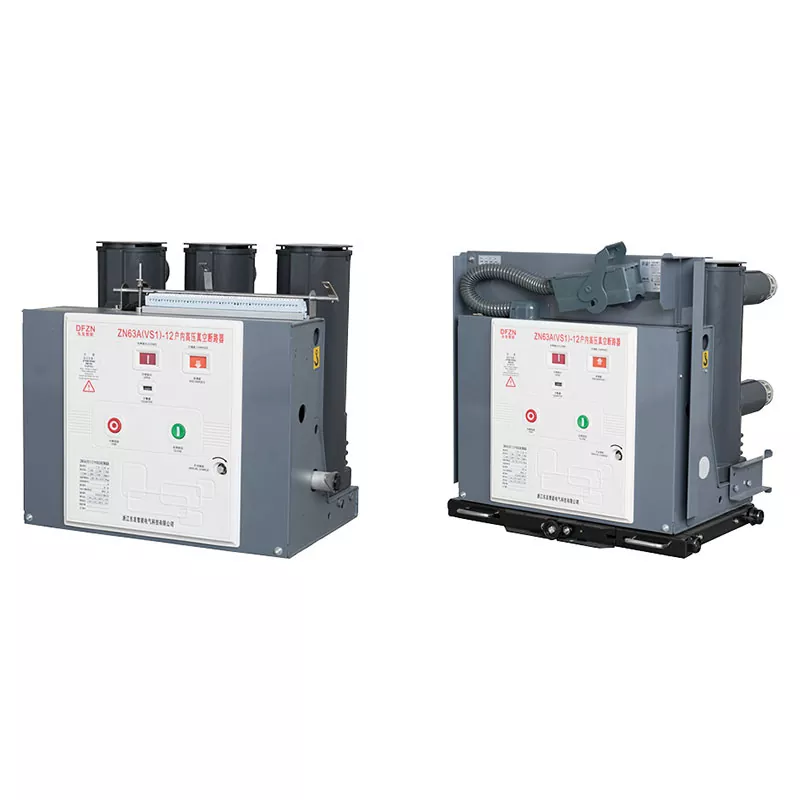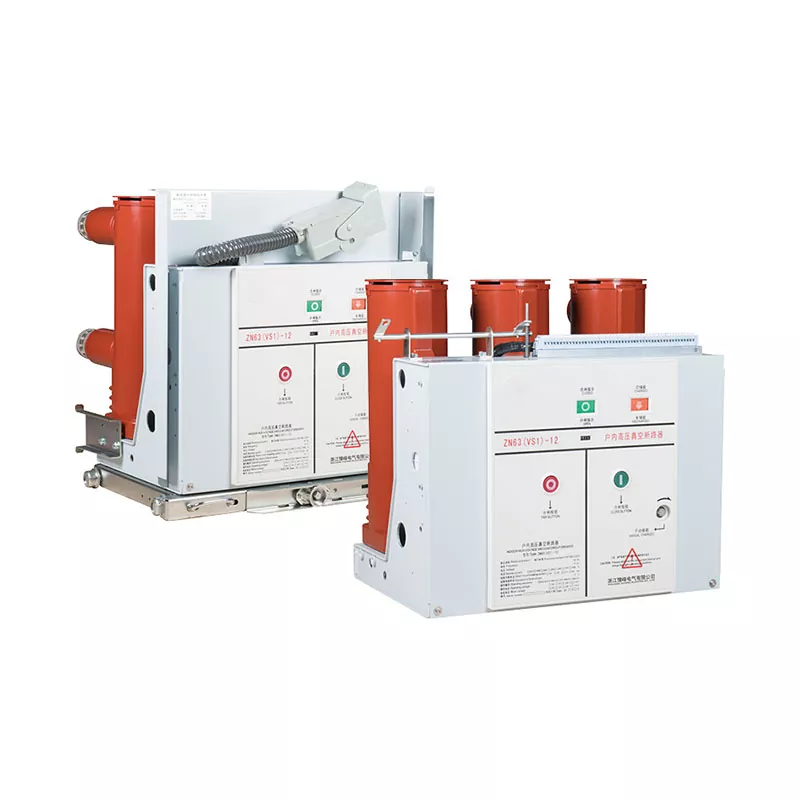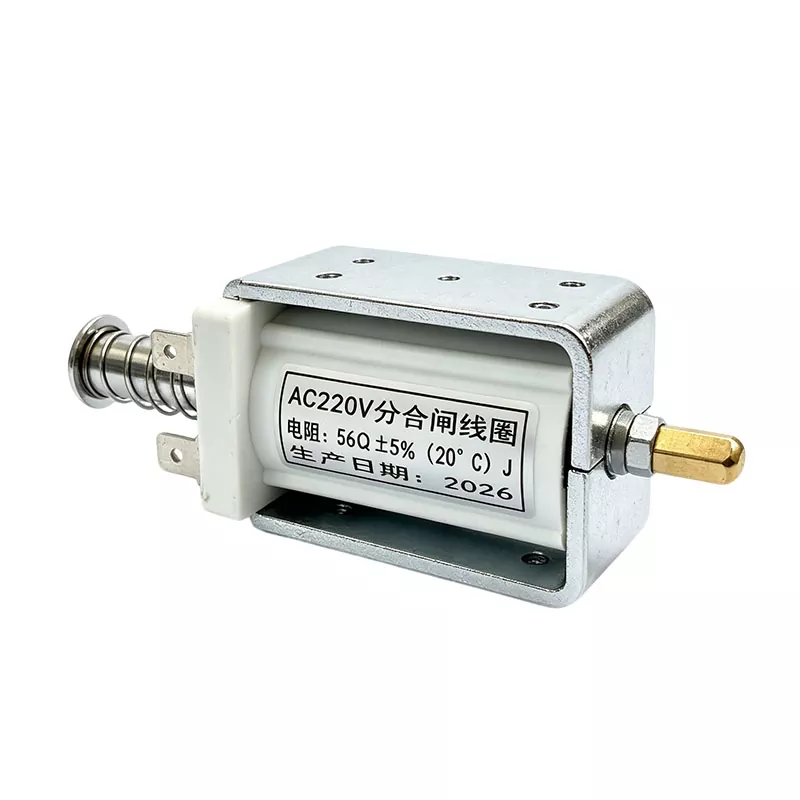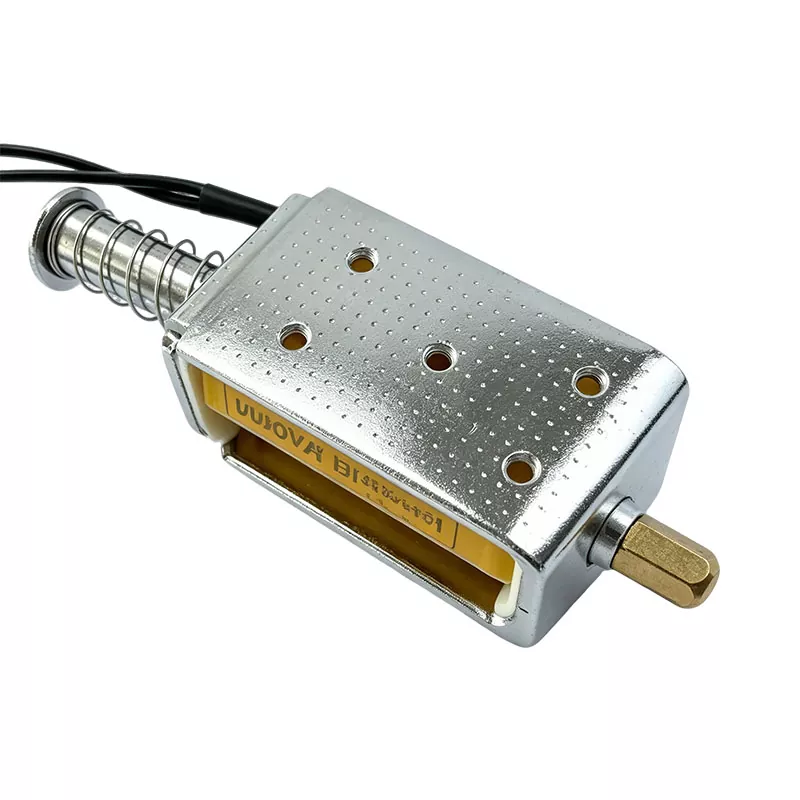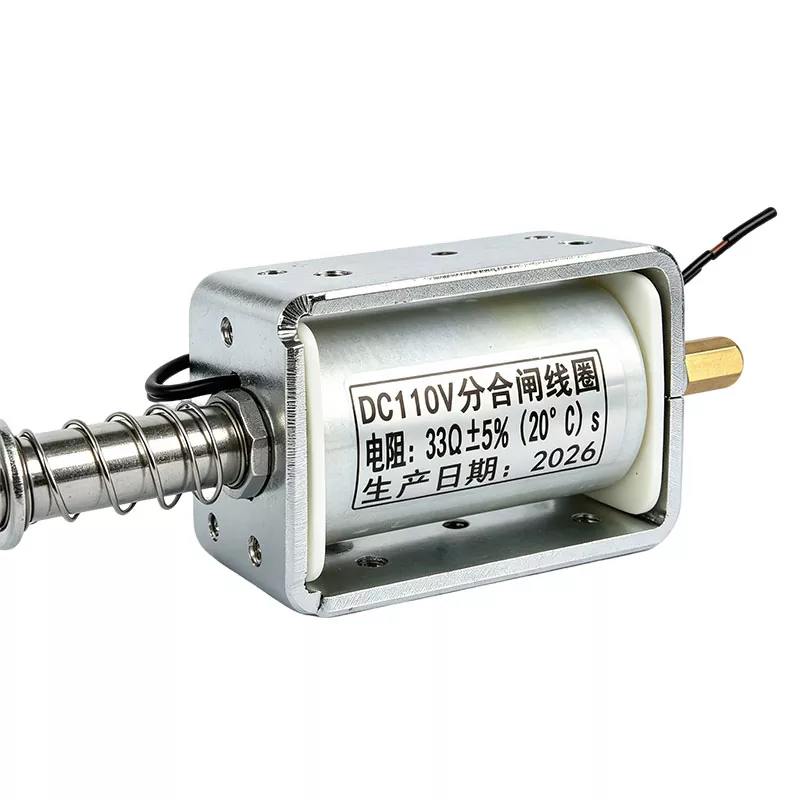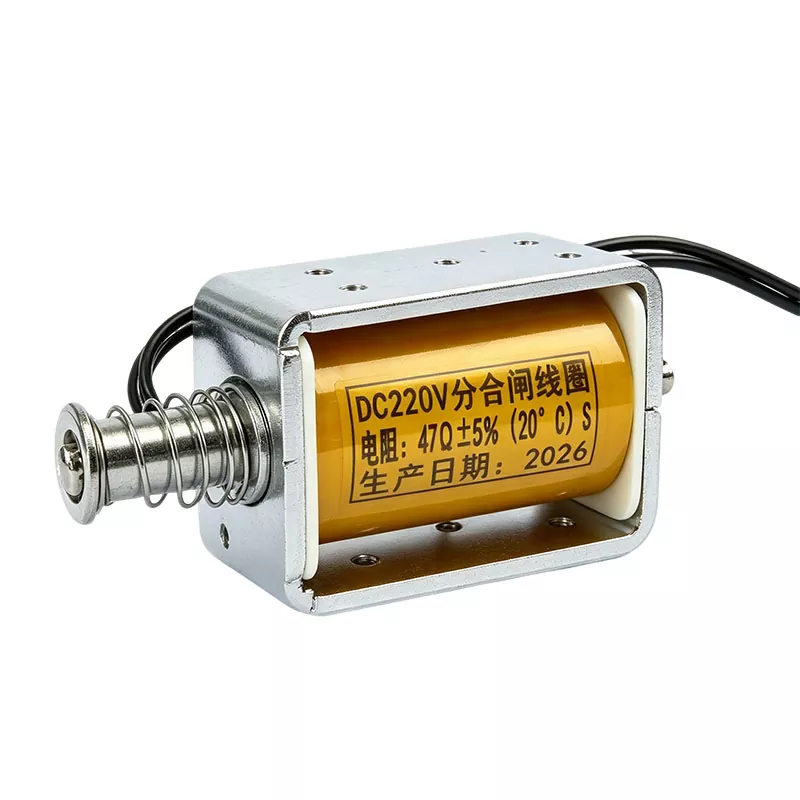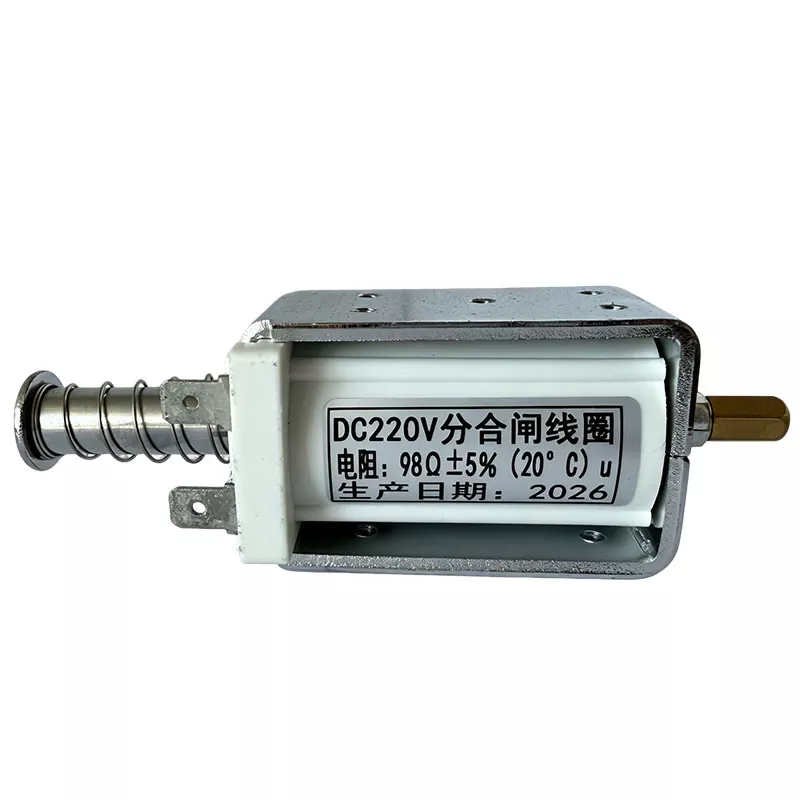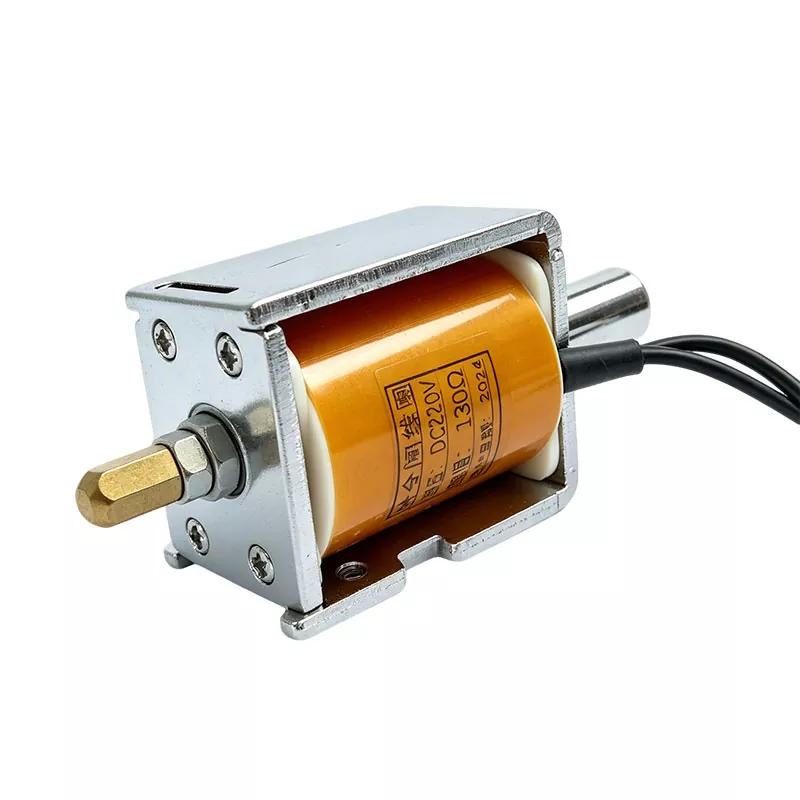
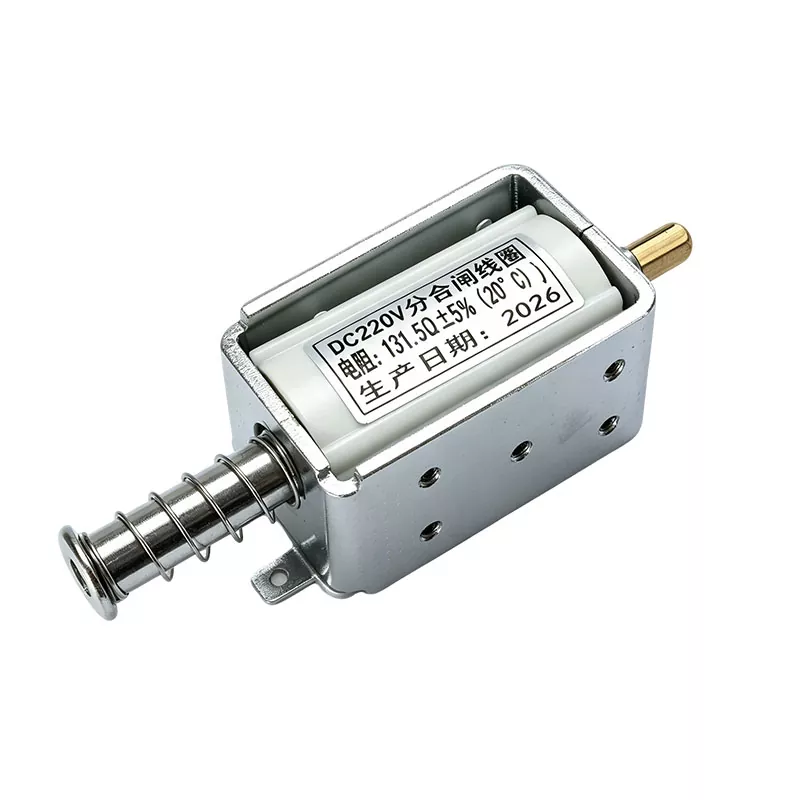
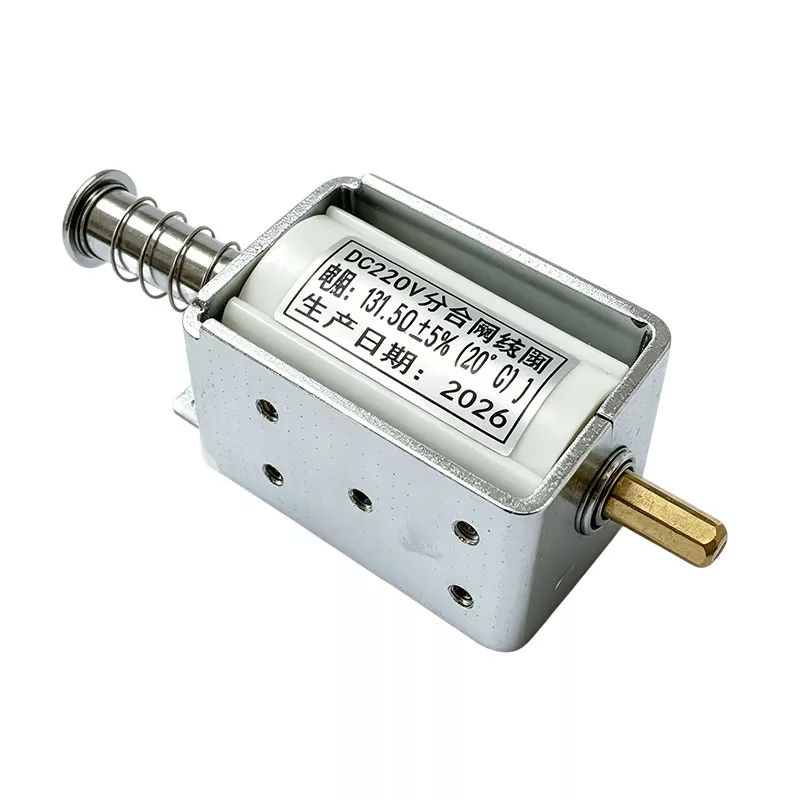
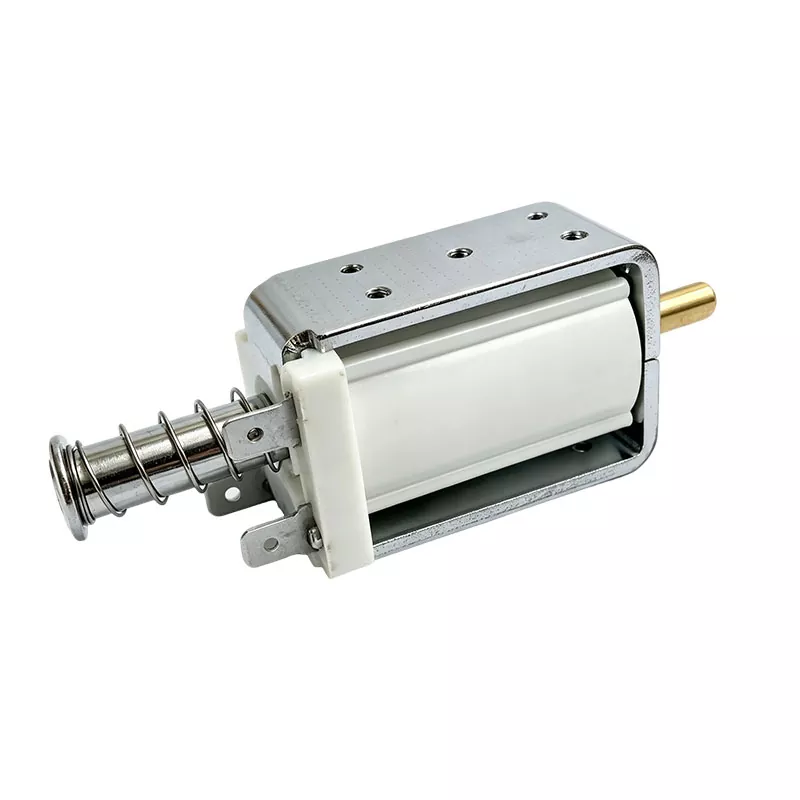
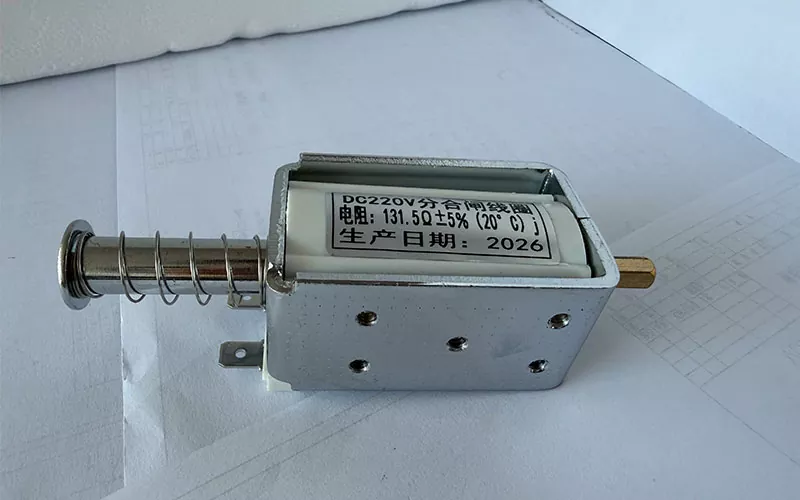
Dongfa Intelligent manufacturer in China supplies DC 220V Closing and Tripping Coil Plug-in Type for Vacuum Circuit Breaker as a core execution part for vacuum circuit breaker operating mechanisms. This short-time duty coil is widely adopted in medium voltage switchgear to trigger closing and opening movements upon receiving control commands. Each product is assembled with flame-retardant bobbin, galvanized housing and brass push rod, individually tested for resistance and dielectric withstand before shipment to guarantee consistent performance across batches.
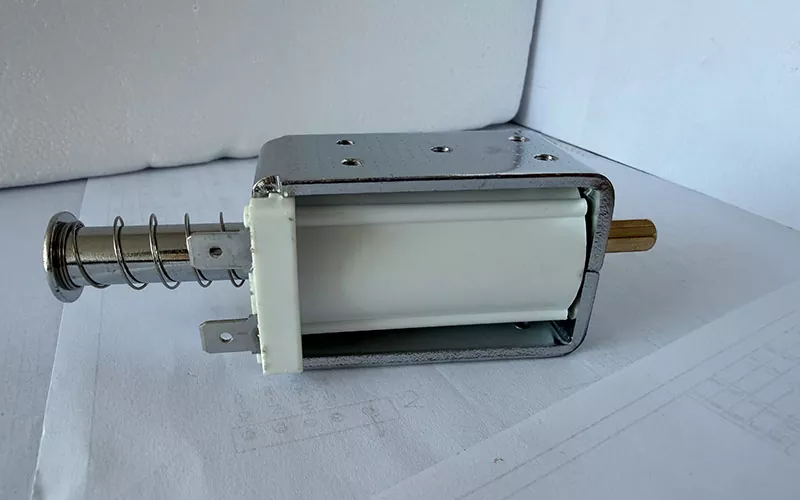
The product acts as the instantaneous power source of circuit breaker operating mechanisms. It only receives momentary power supply at the switching instant rather than continuous energization. When a closing or opening signal arrives, the coil generates strong electromagnetic force in milliseconds to drive the push rod and release or engage the latch inside the mechanism. Once the switching action finishes, power supply must be cut off immediately by auxiliary contacts or time relays.
It is critical not to confuse this coil with overcurrent solenoids or latching solenoids. Overcurrent solenoids connect in series to main power circuits and can withstand long energization, while the DC 220V Closing and Tripping Coil Plug-in Type for Vacuum Circuit Breaker runs on control power for short pulses only. Continuous power supply will trigger rapid temperature rise and burn the coil, even with its 131.5Ω resistance rating.
At DC220V rated voltage, the 131.5Ω coil produces steady-state current of roughly 1.67A and instantaneous power of approximately 368W. This current level balances electromagnetic output and control load demand. If resistance is too low, the higher current will overload control power supply and demand thicker wires; if resistance value is excessively high, insufficient magnetic force may lead to failed breaker switching.
Resistance tolerance is kept within ±5% at 20°C. Precise resistance control maintains identical current output for every DC 220V Closing and Tripping Coil Plug-in Type for Vacuum Circuit Breaker in bulk orders, stabilising switching time, push rod stroke and mechanical action force. This characteristic matters for multi-breaker synchronous control and power protection coordination systems.
| Parameter | Specification |
| Product Name | DC 220V Closing and Tripping Coil Plug-in Type for Vacuum Circuit Breaker |
| Operating Voltage | DC220V |
| Coil Resistance | 131.5Ω |
| Resistance Accuracy | ±5% (20°C reference) |
| Steady-State Current | Approximately 1.67A |
| Instantaneous Power | Approximately 368W (short-time duty) |
| Terminals | 2 pcs plug-in terminals |
| Mounting | Top 5 threaded mounting holes, bolt locking |
| Push Rod Material | Brass |
| Reset Method | Spring self-reset |
| Applicable Standard | GB China High Voltage Electrical National Standard |
| Certification | ISO9001 Quality Management System |
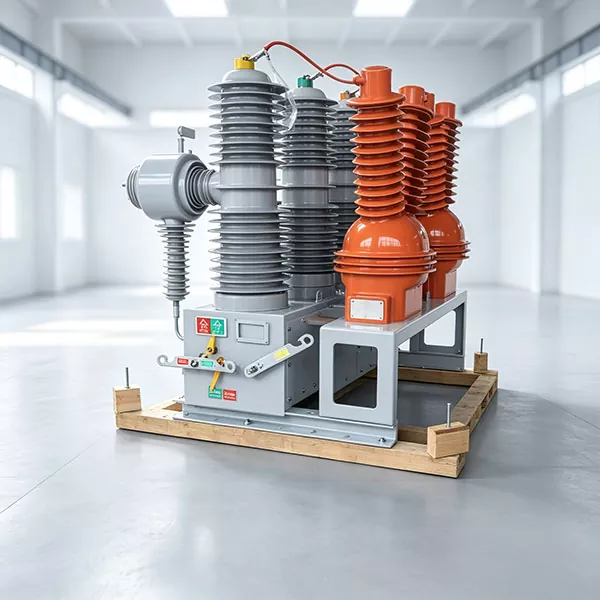
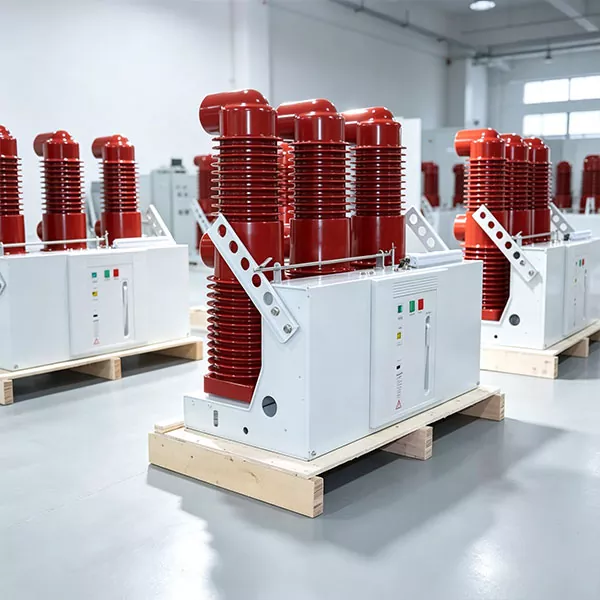
| Application Scenarios | VS1 high voltage vacuum circuit breaker operating mechanisms, power plants, substations and high voltage switchgear |
| Packaging | Carton packaging |
Before ordering a replacement DC 220V Closing and Tripping Coil Plug-in Type for Vacuum Circuit Breaker, collect these key parameters to verify compatibility: original coil model, operating voltage, coil resistance, mounting dimensions and push rod stroke. Mention your project quantity when sending inquiries. Our technical team reviews all parameters before production to avoid mismatched components.
Key selection checkpoints:
Every coil passes two essential tests before delivery: resistance inspection and dielectric withstand test. Simulated short-time duty energization test is implemented to validate instantaneous action reliability. The factory holds ISO9001, ISO14001 and ISO45001 certifications and accepts factory audits from buyers.
Standard orders support 1-unit minimum order quantity. Lead time for standard product ranges from 7 to 15 working days. Customised versions require 15 to 30 working days. The factory supports combined shipment of high voltage and low voltage components to reduce supplier management overhead for switchgear builders.
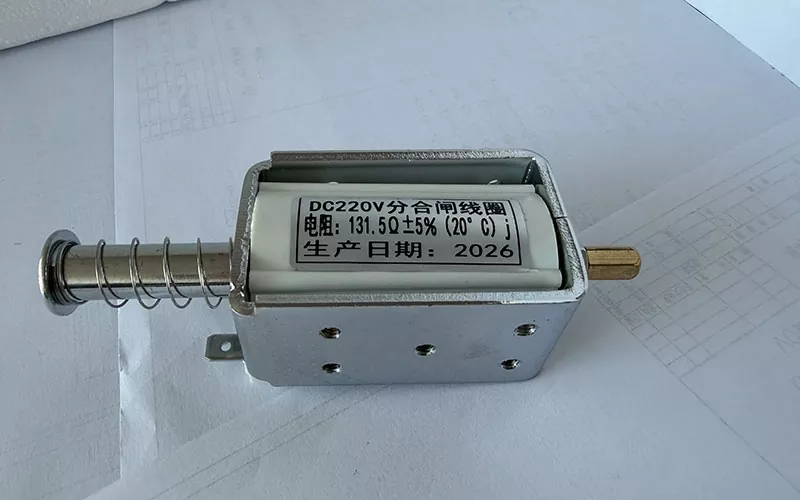
No. DC 220V Closing and Tripping Coil Plug-in Type for Vacuum Circuit Breaker is designed for short-time duty. Continuous energization will cause severe overheating and burnout. The control circuit must cut power right after switching action with auxiliary contacts or time relays.
A: Direct replacement is not recommended. Different resistance changes working current and electromagnetic force, which may result in abnormal switching time or operation failure. Share your old coil parameters so we recommend the correct part.
A: Plug the terminals into matched locking receptacles to prevent loose contact caused by vibration. Remember DC polarity requirements when connecting DC220V control power.
A: VS1 mechanisms from different manufacturers have varying hole layouts. Multiple threaded holes provide flexible mounting positions, improving compatibility during coil replacement work.
A: Please provide operating voltage, coil resistance, mounting dimensions, push rod stroke and quantity. Original coil model information is helpful especially for replacement projects.
A: Yes. Standard items support MOQ 1 unit for trial testing. Expedited scheduling can be arranged upon request for urgent projects.
Address
No. 281, Wei 18th Road, Yueqing Economic Development Zone, Yueqing, Wenzhou, Zhejiang, China
Tel